Watch live TV without the clutter
Catch up with the channels everyone actually watches — news, sport, soaps, films and kids’ TV — through Freeview, streamed effortlessly over your Full Fibre broadband.


Picture TV on your terms. That means no bloated channel bundles and no long-term tie‑ins. Just the TV deal you want without the added faff.
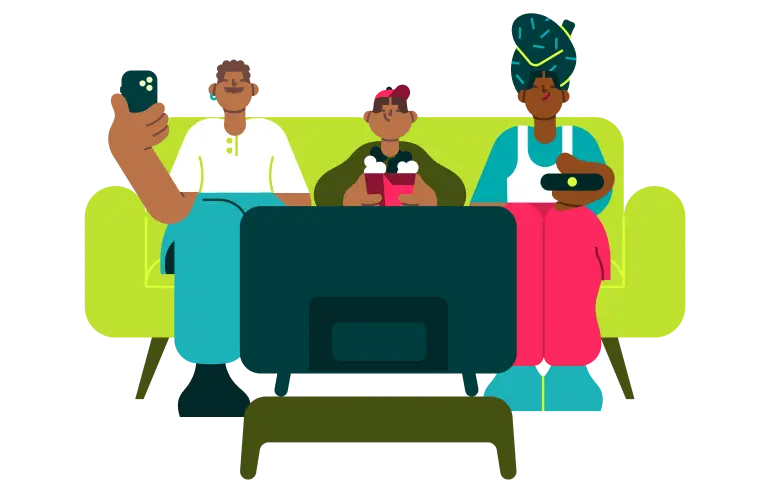


Catch up with the channels everyone actually watches — news, sport, soaps, films and kids’ TV — through Freeview, streamed effortlessly over your Full Fibre broadband.

Binge boxsets, watch the big match, or lose yourself down a YouTube rabbit hole — TalkTalk Full Fibre delivers the speed and stability you need.
From HD to 4K, watching across multiple screens, or firing up something new while someone else finishes an episode — these internet and TV deals are designed around how homes really use TV now.
And because everything runs through the TalkTalk TV Hub, switching between live TV and apps is instant. No dead ends. No loading screens that feel like a personal insult.
Our fibre broadband and TV deals are built on reliable, speedy connectivity that keeps households running smoothly, even when everyone and their dog is online.
With Full Fibre broadband, fibre optic cables run all the way to your home — delivering faster speeds, lower latency and better reliability than standard part-fibre.
That means: